
 Customisation
How to Customise Your Ghost Theme: Design & Branding Essentials

Introduction
Ghost CMS is a powerful platform for content creators, bloggers, and businesses. But to stand out, you need a site that reflects your brand identity. Customising your Ghost theme goes beyond uploading a logo — it’s about aligning colours, typography, layouts, and interactive elements to tell your story effectively.
In this guide, you’ll learn practical ways to customise your Ghost theme while maintaining performance, accessibility, and SEO-friendly practices.
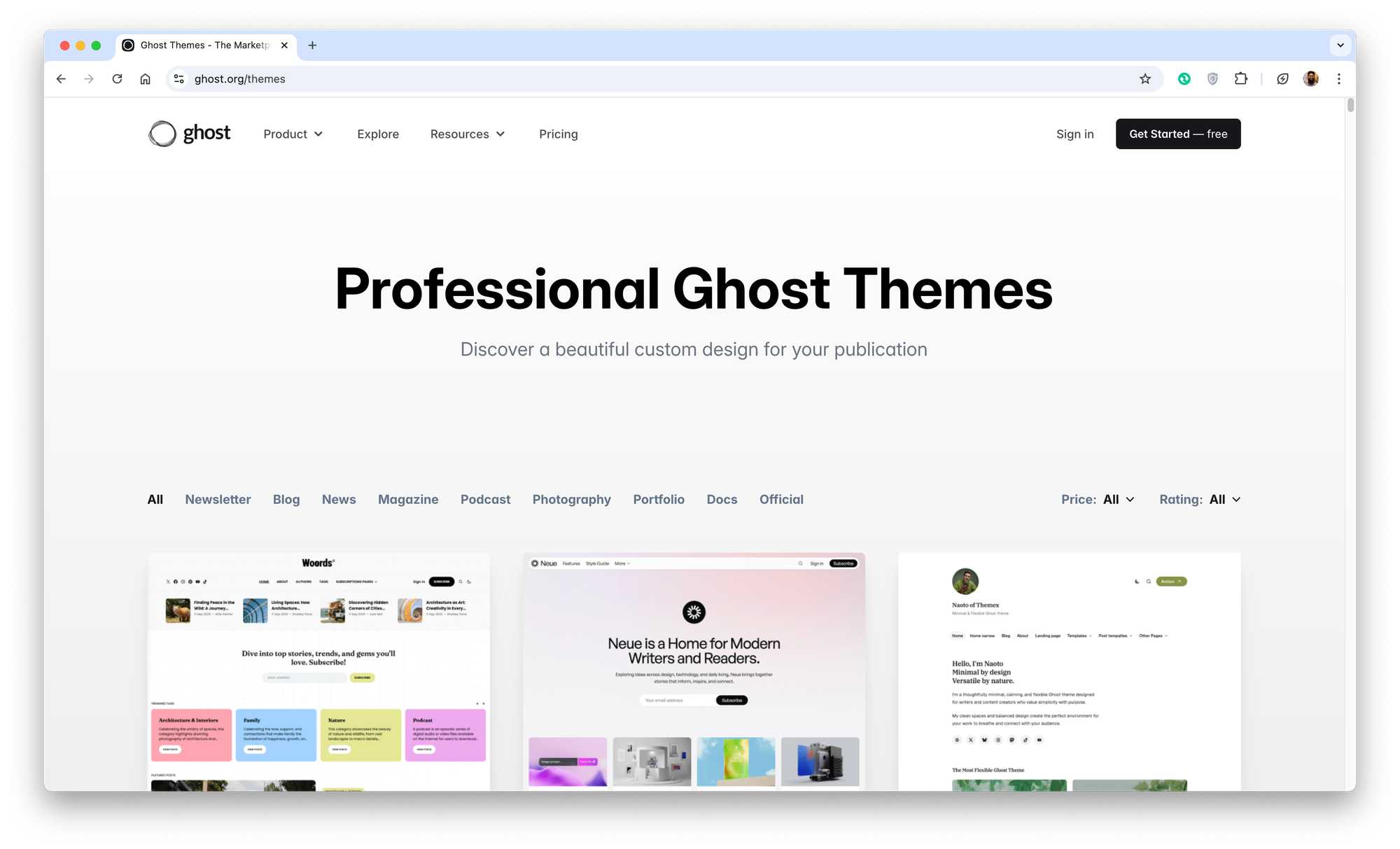
1. Choose the Right Base Theme
Before diving into customisation, start with a theme that aligns with your vision:
- Lightweight and fast – Ghost is optimized for speed, so choose a theme that doesn’t load unnecessary scripts or styles.
- Flexible layout options – Look for themes that allow changes to headers, footers, and post layouts.
- Modern and responsive – Ensure the theme looks great on mobile, tablet, and desktop.
2. Customising Colours & Brand Palette
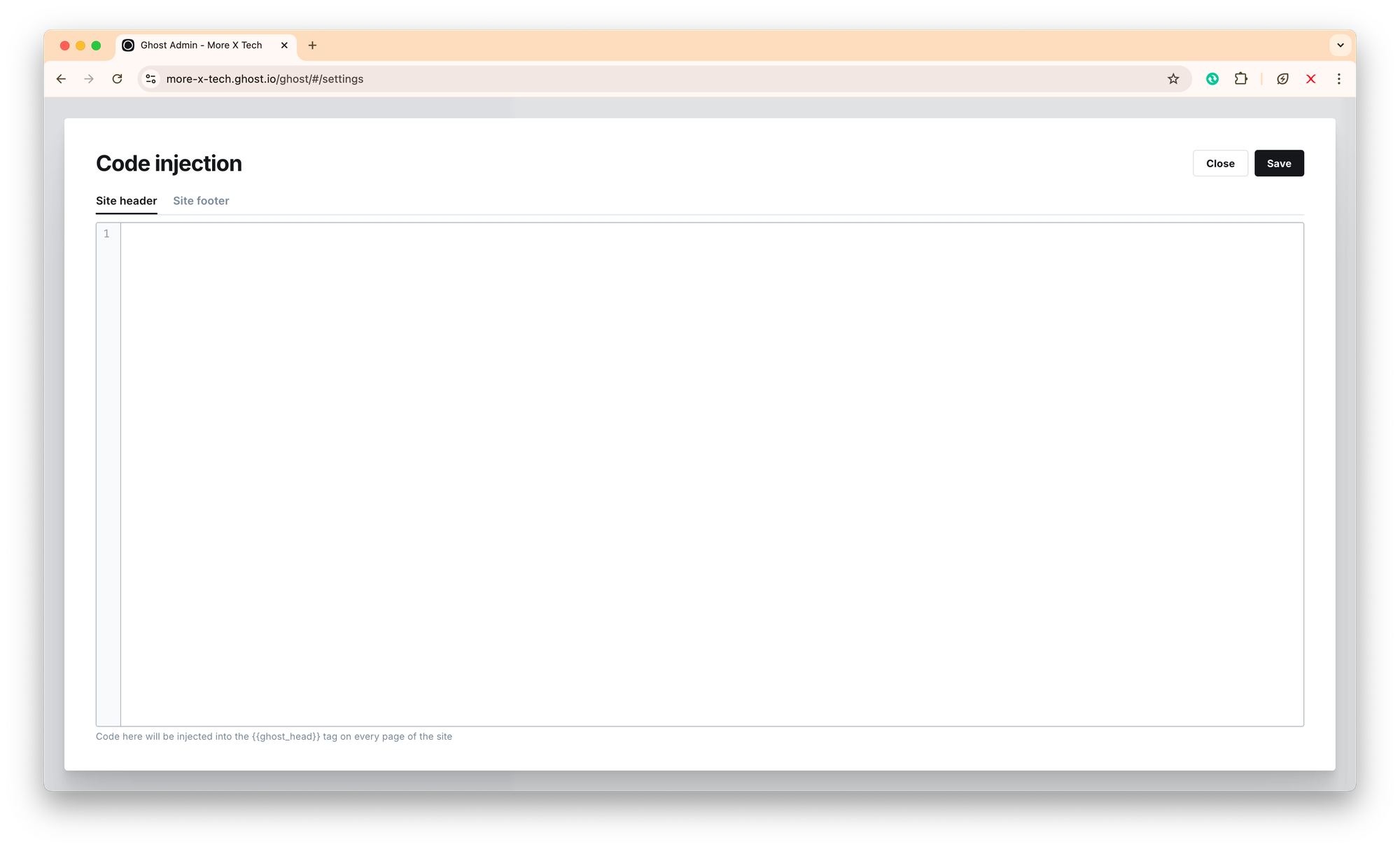
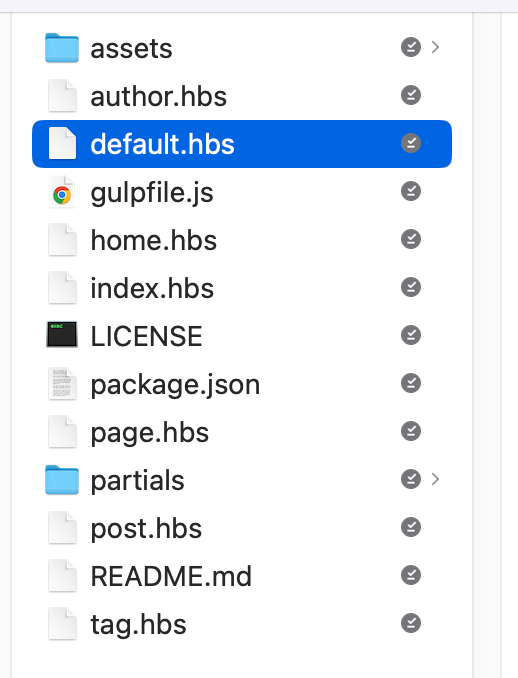
Your brand colours are essential for visual consistency. Ghost allows you to override theme variables using Code Injection or editing the theme’s default.hbs / CSS files.
Steps:
- Define your primary, secondary, and accent colours. Example:
:root {
    --brand-primary: #6C63FF;
    --brand-secondary: #FF6584;
    --brand-accent: #FFC107;
    --brand-background: #FFFFFF;
    --brand-text: #333333;
}- Apply these colours to buttons, links, headers, and footer elements.
- Use contrast checks to maintain accessibility standards (WCAG).
3. Typography & Font Selection
Fonts define your site’s personality and readability:
- Use system fonts for performance or Google Fonts for a distinctive style.
- Set heading and paragraph fonts in your CSS:
body {
    font-family: 'Inter', sans-serif;
}

h1, h2, h3, h4 {
    font-family: 'Merriweather', serif;
}- Maintain consistent line height and spacing for better readability.
4. Logo & Favicon Integration
Your logo is a core branding element. Ghost allows easy logo and favicon updates:
- Navigate to Ghost Admin > Settings > Design and Branding > Customize.
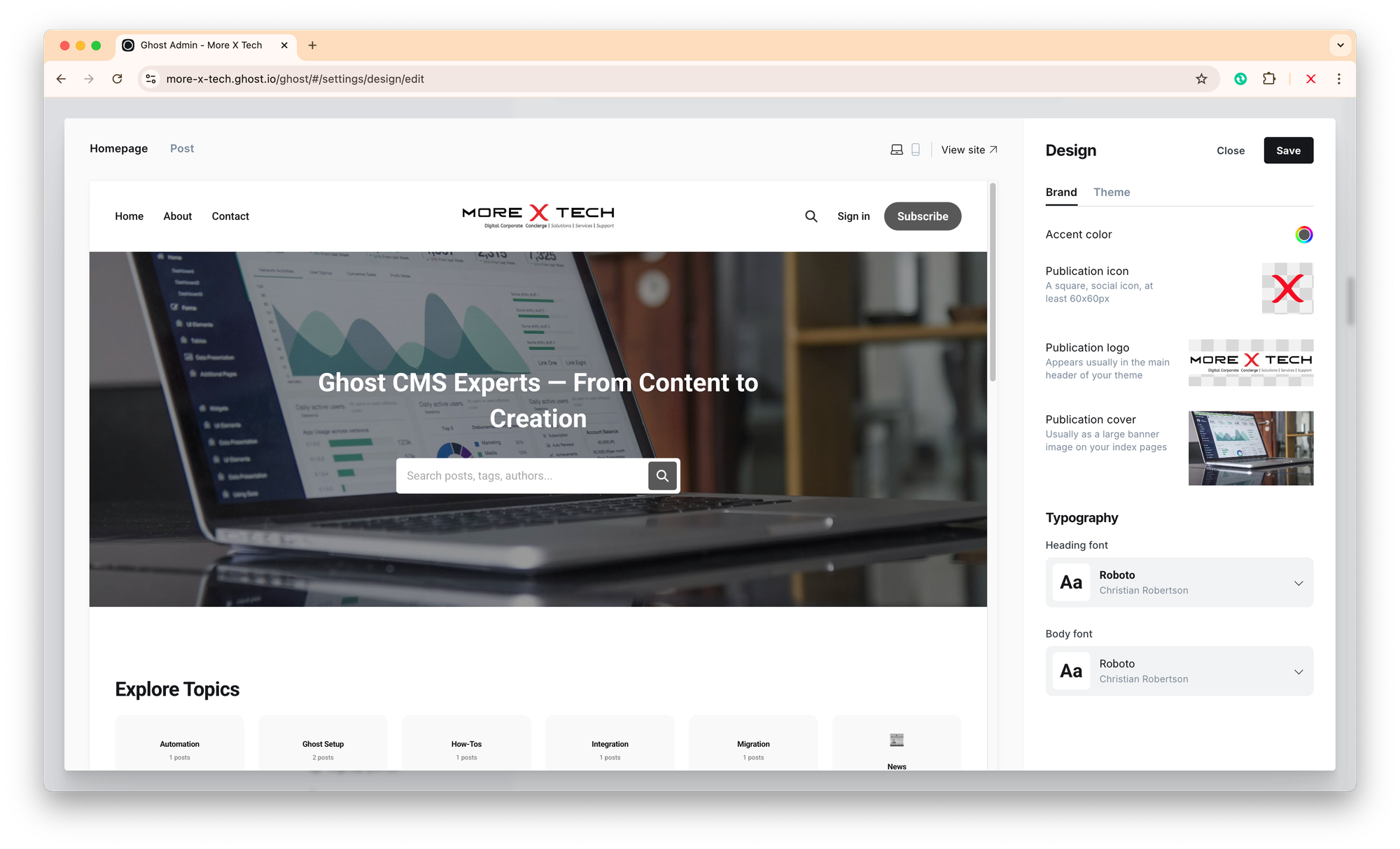
- Upload your logo (transparent PNG preferred for flexibility).
- Add your favicon (16x16 or 32x32 px) for browser tabs.
Advanced Customisation: Adjust the logo size and placement with CSS:
.gh-head-logo img {
    max-height: 120px;
    margin-bottom: 10px;
}5. Header & Navigation Customisation
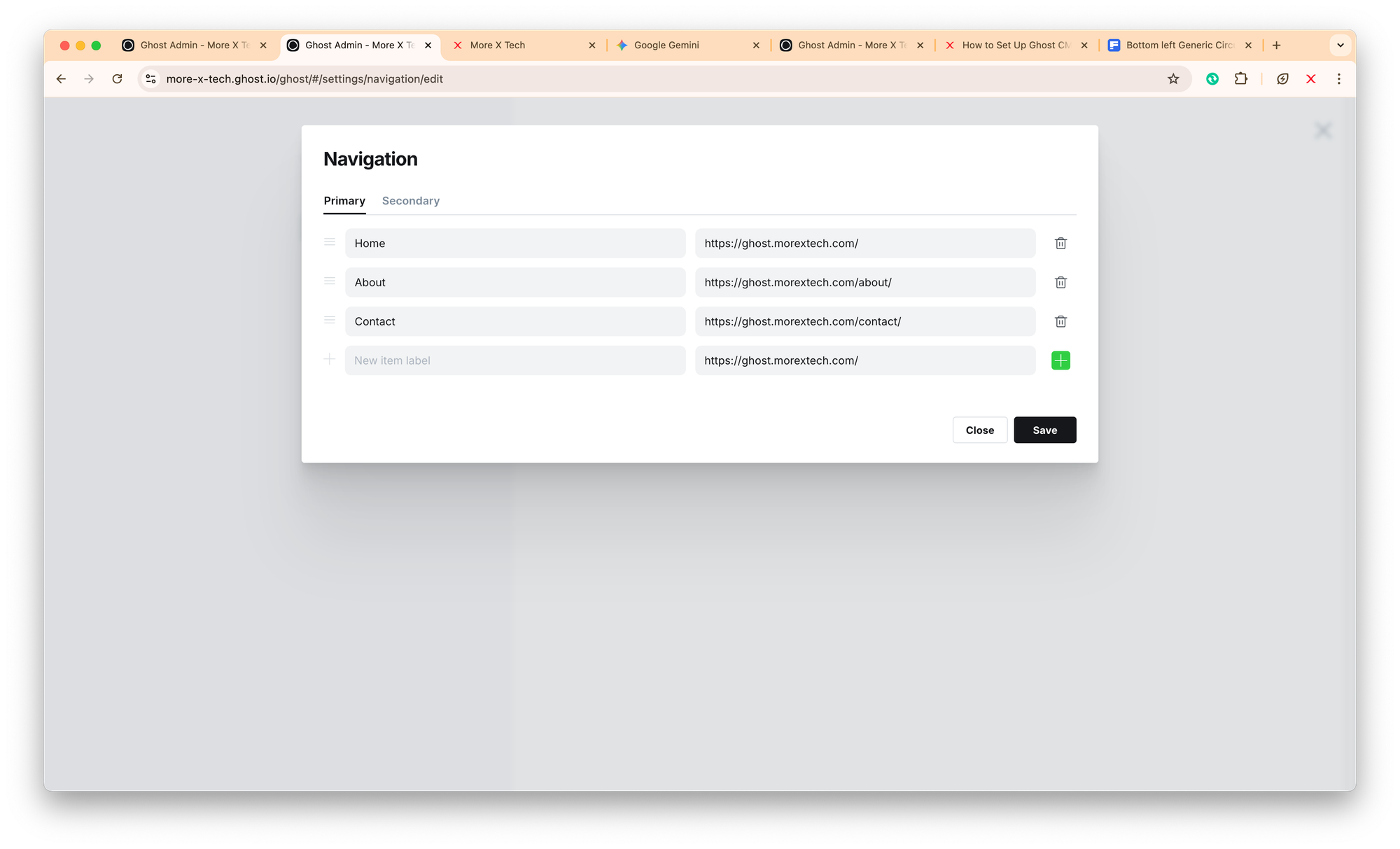
Your header and menu define the first impression:
- Add custom links like About, Resources, or Shop from Ghost Admin > Settings > Navigation
\
- Consider sticky navigation for better user experience.
- Use drop downs for categories if your blog has multiple topics.
6. Footer & Call-to-Action Sections
Footers are not just for copyright. You may add newsletter signups, social media links, or featured posts.
However, it is recommended to keep the layout simple to reduce clutter. Use a branded colour background and readable fonts.
Example CSS for footer background:
footer {
    background-color: var(--brand-primary);
    color: var(--brand-background);
    padding: 40px 20px;
}
7. Custom Layouts & Templates
Ghost allows custom templates for posts, pages, and tags:
- Duplicate an existing
.hbsfile and rename it for your template. - Adjust layout components (e.g., sidebar, image alignment, featured sections).
- Test templates on staging before publishing live.
8. Adding Custom Scripts & Integrations
Enhance your theme with extra functionality:
- Code Injection (Header/Footer) for analytics, chat widgets, or marketing pixels.
- Avoid heavy scripts that slow down page load.
- Keep SEO in mind: lazy-load non-critical scripts.
9. Mobile & Performance Optimisation
Mobile-first design is essential:
- Test your theme on multiple devices.
- Use compressed images (WebP recommended).
- Minify CSS & JS where possible.
10. Testing & Iteration
After customisation, ensure your theme files are flawless. Use the official tool provided by Ghost team to check it: https://gscan.ghost.org/
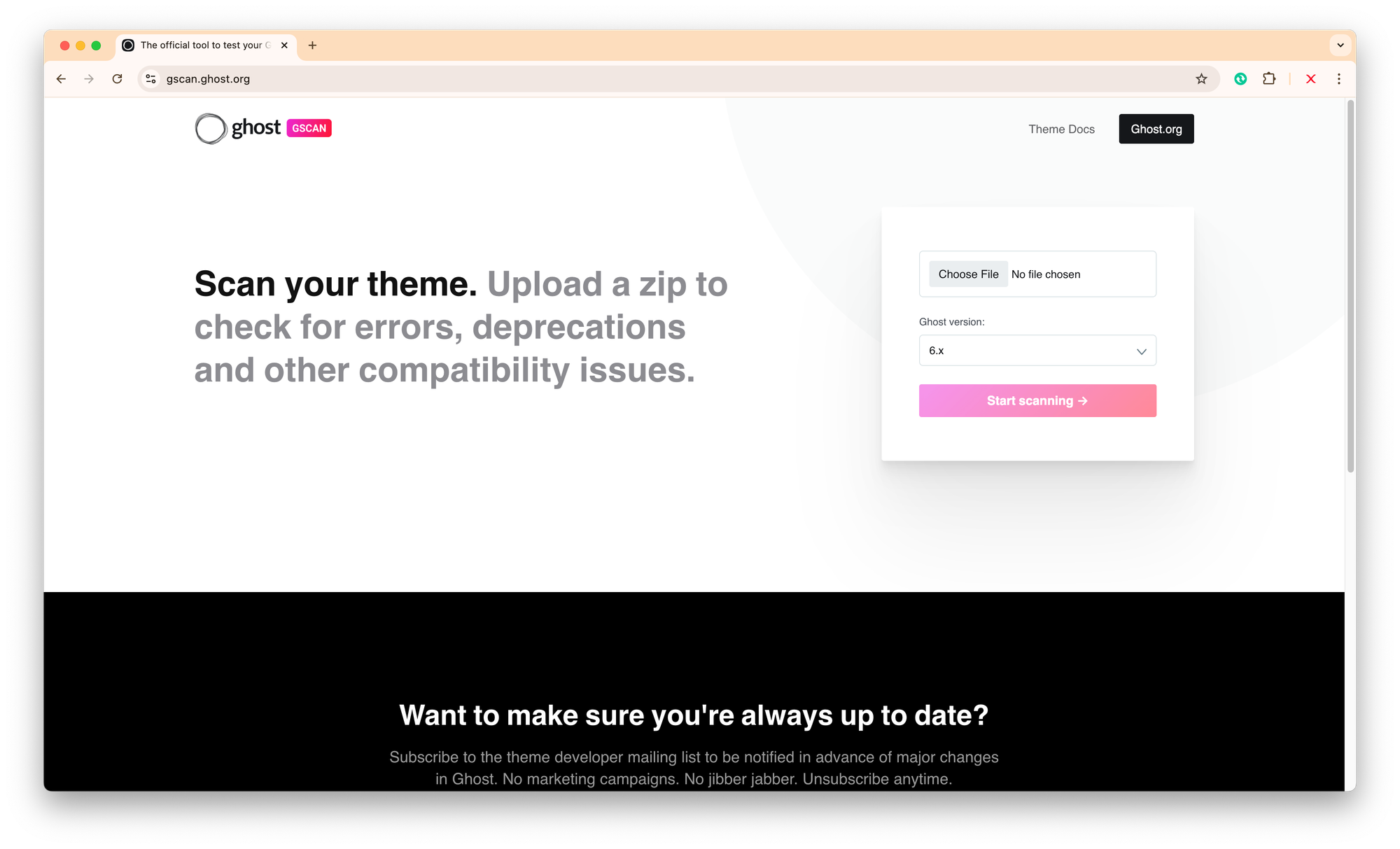
Further, after uploading the theme, make sure to:
- Check links, headings, and metadata.
- Validate structured data and schema.
- Ask peers for feedback on design and usability.
- Keep a backup of your theme before every major change.
Conclusion
Customisation of your Ghost theme is about more than just 'aesthetics' — it’s about branding, usability, and performance. By carefully selecting your theme, colours, fonts, and layouts, and testing rigorously, you can create a Ghost website that looks professional, reflects your brand, and ranks well in search engines.
Start small, iterate based on user feedback, and watch your Ghost website transform into a unique, engaging online presence.
If you need expert help, Contact Us directly or through Expert directory on Official Ghost site.